TB-500 alongside thymosin beta-4
A short fragment carries a great deal of borrowed expectation. The identity of the tested molecule changes the whole discussion.
Thymosin beta-4 safety trial
Forty healthy volunteers took part in a randomized, placebo-controlled study of intravenous thymosin beta-4. The full-length protein was generally tolerated, with no serious adverse events or dose-limiting toxicities reported. Infrequent mild or moderate adverse events did occur.
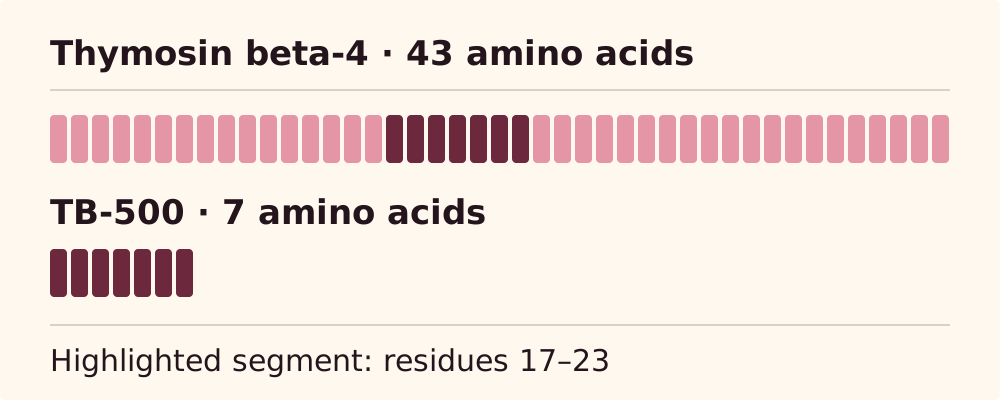
I welcome a human comparison with a placebo. Then the substance name becomes decisive: the experiment used full-length thymosin beta-4. TB-500 is a synthetic, acetylated seven-amino-acid fragment from that protein. Human safety evidence for the fragment remains missing.
It is an easy substitution to miss when both names appear in the same conversation about injury.
Actin binding
The structural work on thymosin beta-4 bound to actin helps explain the interest. Actin helps cells maintain their shape and move; full-length thymosin beta-4 holds individual actin units in reserve, regulating their availability for assembly. The short region represented in TB-500 carries an actin-binding motif.
The review of full-length thymosin beta-4 brings together cell migration, new vessel formation, reduced scarring and other repair-related activity. Those are several jobs performed across different experimental settings. Isolating a short region leaves open how much of the larger protein’s behavior the fragment can reproduce.
For me, the length comparison makes the substitution unusually plain. The available human work tested the larger molecule.
Neurological function after stroke
In the dose-response study after embolic stroke in male Wistar rats, some tested amounts improved neurological function, while the highest amount gave no significant benefit. This was full-length thymosin beta-4 again.
The highest-amount result is the piece I’d refuse to leave out. Researchers measured neurological function and found a limit to the simple story of increasing benefit. It offers a good reason to question confident community escalation schemes.
A rat recovering from stroke presents a very different problem from an athlete with a muscle tear. The experiment supplies neither a human recovery result nor a validated regimen for TB-500.

TB-500 accounts and possible harms
Community reports describe muscles, tendons or ligaments feeling better, easier joint movement, less soreness and occasional wound or hair changes. Complaints include sore injection sites, fatigue, dizziness, headaches, nausea, flu-like feelings and mood changes. These anecdotal accounts are not clinical evidence of repair or a measured safety profile.
The sports-medicine review found encouraging animal outcomes alongside scarce rigorous human safety data and the potential for serious harm. The fragment still lacks completed controlled human trials establishing a healing benefit. Product identity and purity are additional concerns.
Theoretical worries about tumor growth arise from repair-related cell migration and angiogenesis; the literature here establishes no human cancer finding for TB-500. I can’t assign certainty to either the optimistic stories or the theoretical worries.
Regulatory and competition status
TB-500 has no FDA approval for human use or approved therapeutic indication. Both TB-500 and thymosin beta-4 are prohibited in sport under the relevant peptide and growth-factor categories, in and out of competition.
Anti-doping laboratories can identify TB-500 and breakdown products. That analytical capability provides no evidence that an injury heals and supplies no safe timing window. Current eligibility is a matter for the sport’s anti-doping body.
The contact-sports questions bring the human injury claims back into focus. The full reading list includes the structural, animal and human-safety papers discussed above.